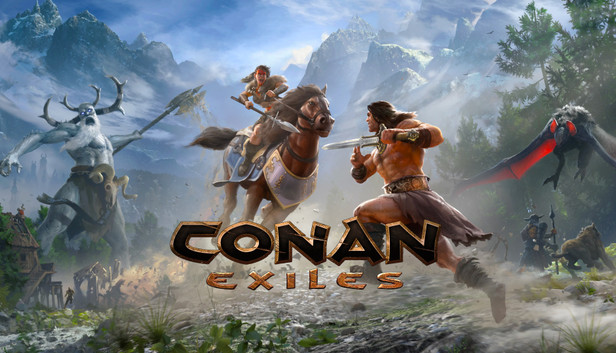
Conan Exiles
By Iker Giménez
Summary
- Supported a live game with bug fixes, exploit investigations, and performance improvements
- Extended an existing data tracking solution to support the design team with better data on player trends
Personal Highlights
- First professional experience with Unreal Engine 4
- First professional experience with a live game
- Learned a lot about pitfalls game development teams often fall into
Video
Project Description
My time at Funcom is a difficult point in my career. I left a team I was very fond of at Ubisoft Barcelona, and moving to Oslo, Norway was a very big change. Relocating to a country that you don’t speak the language of and that is very different culturally to what you grew up with is a challenge. On top of it all, the SARS-COV-2 pandemic started while I was just getting my feet under me at Funcom and in Oslo, and I had a medical emergency at the start of 2020 that was very scary to face in a foreign country. I did like the experience of living in a country where it snows often and services and people are used to it, along with a place with big parks and easily walkable spaces.
While at Funcom, my main contribution to Conan Exiles is related to taking an existing data tracking system and extending it so that the gameplay and design teams are able to selectively track things player trends to figure out playtime funnels, popular item sets, and similar things to better direct the team’s decisions. The existing system was only used to gather more information about crashes that were particularly difficult to debug, which was a lot less data than what eventually got sent by the system I expanded. This meant coordianting with the gameplay team so that they knew how to add code to collect the data, and with tools to be able to make sure the infrastructure in place was able to process all the data coming in.
Beyond that, I learned a lot about the difficulties of supporting a live game. While with Assassin’s Creed III I had to be careful about changes to not break existing content, this was a lot more complex with Conan Exiles, because changes did not have as much QA time to go through before they went live. Disruptions to the build system were also much more important to address quickly, and builds were a lot harder to make in order to test changes. Supporting a live online game with modding support also has a lot of challenges associated with it, because people need access to a lot of project internals that increases the attack surface area. Decisions made several years before I came on meant that some exploits were very challenging to fix, as they would need extensive code changes to completely address, but the time was not available to do all those changes, in addition to high risk of breaking existing content. Overall, I learned a lot about what patterns to avoid and what to flag as problems early on in development to be able to address them before they become so engrained in teams that they can’t be undone, and the project quality suffers for it. It made me more curious about how other games have tried to address these challenges. It has helped me to grow my skills beyond just programming, improving my communication, leadership, planning, and other equally important skills.